

Tips & Tricks
How to Choose the Right Fabric for Your Project – Part 1

The perfect bag begins with the right fabric, but with so many options available, how do you choose the right one? Whether you’re making the Stand Up & Tote Notice, the All Zipped Up Hobo Bag, or the Classic Clutch, the fabric you choose will shape everything from the look to the longevity of your creation.
In today’s post, we’ll discuss the best fabric choices for various types of bags, key considerations for durability and style, and how to confidently select the perfect material for your next handmade bag.
Quilting Cotton
Cotton is often the most accessible and easiest-to-use fabric when making your first or hundredth handmade bag. It is the most widely available material and most cost-effective. When choosing the cotton to use when creating your handmade bag, wallet or pouch, you want to pay attention to 2 things: fabric content and thickness. Not all cottons are created equally. While it may be tempting to choose a cotton that has a small polyester content, that tiny amount will wreak havoc on your project. Even the smallest amount of polyester content can cause wrinkling, shrinkage and distortion to your project as you iron. I know it is tempting to purchase it because it can be cheaper, but it is just not worth it!

As for thickness, not all cotton fabric is made the same. Take, for example, Art Gallery Fabrics. Art Gallery Fabric is absolutely stunning, but it has a tighter and thinner weave to it, causing it to be much thinner. This is not an issue for smaller projects, but for larger ones like the Adventure Time Backpack or Stand Up & Tote Notice, you may find it does not wear as well! If you are looking for the thinness of fabric like Art gallery Fabrics but want a more durable material, Batik cottons are an excellent way to go! Batiks have a very tight weave to them and because of the dying process, are very crisp when ironed! They make for beautiful boxed corners, smooth card slots and wrist straps!
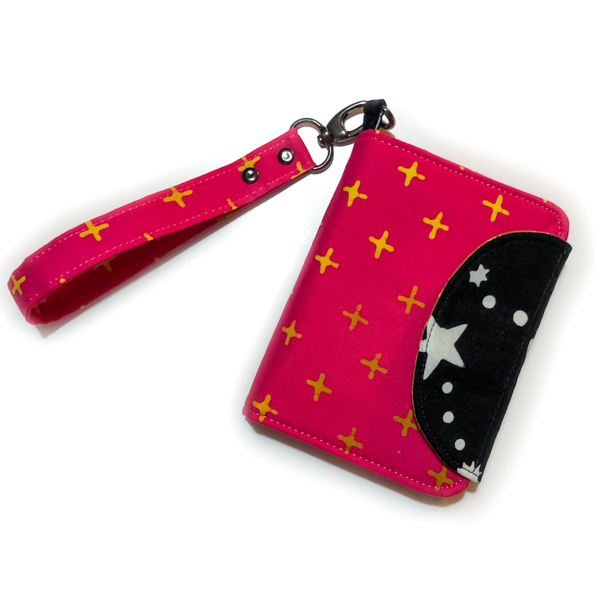

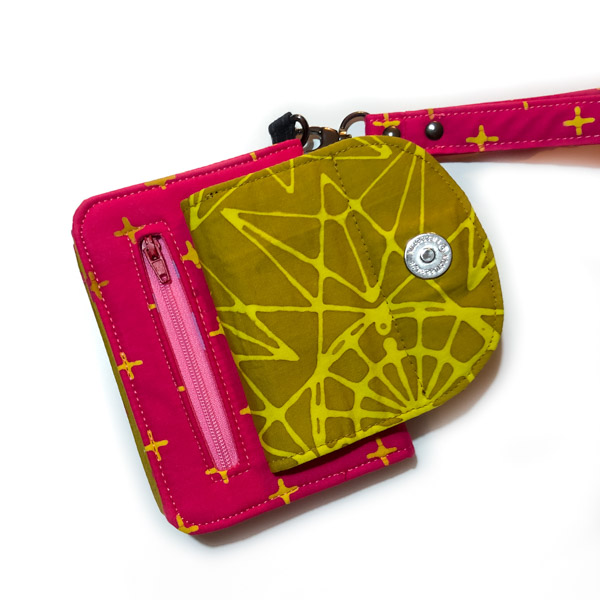
Aimee’s Layla Essentials Purse in Batiks
Quilting cotton is often the go-to because it is easy to sew and is easy to wash and care for. It offers a soft texture to your projects and is quite durable once you’ve adhered an interfacing and stabilizer to it. The beauty of cotton is that if you only interface your project and skip the fleece or foam, you get a delightfully slouchy bag!

Breakdown: Easy to use, versatile, affordable, durable and easy to clean, can be fused to all interfacing and stabilisers
Canvas and Waxed Canvas
When you are looking to add more structure to your handmade projects, canvas is an excellent way to go! Like cotton, you want to watch your fabric content. While being durable, you may find that canvas that has a polyester content may not shrink like quilting cotton but will often melt a little when you iron, so it’s best to opt for natural fibres like cotton or bamboo. Unlike quilting cotton, thicker canvases won’t need interfacing! It can often be durable enough on its own, only requiring stabilizers! Canvas can easily be sewn with your quilting cotton to give additional durability to the bottom of your bag without adding the extra thickness or stiffness that vinyl and leather add!

Now let’s chat about waxed canvas! Like a thicker canvas, it won’t need interfacing. Having that layer of wax on it prevents any materials from fusing to it. If you choose to add a stabiliser, you will have to baste it in place instead. When working with waxed canvas, you want to use clips instead of pins, as pins will often leave marks behind.
When sewing with waxed canvas, you won’t be able to iron on top of it because of that waxy layer. This means any little scrunching or mark will show in the finished project. Most makers love this look, but if it’s not for you, you can use a hair dryer on a low heat setting to soften the wax and smooth out the wrinkles. Just make sure to keep the iron moving and not held in one place for longer than a few seconds.


Both Canvas and waxed canvas are incredibly durable and are great for larger bags and totes. It can work well for pouches, clutches and wallets, but please note that it will add quite a bit of thickness to your seams, so prepare for that!

As for care and maintenance, a cotton or linen canvas can easily be washed by machine or spot cleaned if preferred. Waxed canvas needs to be spot-cleaned by hand and allowed to air dry. Again, with a finished bag, you can use the hair dryer trick through the use of the bag to smooth out those excessive wrinkles!
Now the big question: is canvas material beginner-friendly? For a confident beginner, absolutely! Just remember to have lots of patience with the thickness of the material and ALWAYS do so with a brand-new, sharp denim needle!
Breakdown: Versatile, durable, adds structure, confident beginner friendly, great for bags, totes or accents on smaller projects.
Cork
Want to try sewing something a little more sturdy, but aren’t quite there yet for vinyl and leather? That’s where cork comes in! This delightfully soft material often sews like butter! It comes in various thicknesses and often has an interfacing or stabiliser fused right to it.

Because cork already has a stabiliser added it it, you have to make sure you store it carefully. Over time, that adhesive will break down, causing the cork to delaminate and fall apart. Store your cork fabric in a cool, dark place and use it up quicker than that quilting cotton you’re hoarding!
Cork is the next step after quilting cotton and canvas for bag makers. You often don’t need non-stick food for your machine (unless it has any sparkly or metallic accents) and only need a denim needle to sew with!

A few things to note when sewing with cork. Your stitch holes will show, so if you make a mistake, they will not go away. Try to be as accurate as possible when sewing. Cork is also a thicker material, so you will need to lengthen your stitch length when topstitching. This helps to move the material more easily on the lower-feed dogs. I personally don’t like to use a walking foot with cork, just so I don’t have the little feet of it making any marks on the cork.
Because cork is a thicker material, we recommend it for totes, bags and larger projects. It can be used for smaller projects like wallets and pouches, but you will find the seams are often difficult to topstitch, and strap d-rings are too thick! It does, however, make the perfect accents for pouches and clutches like our Classic Clutch, and if you follow our Double Sided Strap and Wrist Strap tutorials, you can make some stunning straps with it!

Cork is probably one of the more expensive materials to work with in bag making; however, it is often natural, renewable and vegan-friendly, making it a perfect alternative to vinyl or “faux leather”.
Cork fabric does need to be spot cleaned by hand, but it will often repel water, making it the perfect item for bag bottoms! To extend the life of your cork project, you can use a leather conditioner on it, but please make sure to check with the manufacturer to ensure which one is best to use!
Breakdown: Versatile, durable, adds structure, confident beginner-intermediate friendly, great for bags, totes or accents on smaller projects, can’t be ironed, must use clips instead of pins
Vinyl
Now let’s dive into Vinyl materials! The number one thing you need to know about vinyl is that every single vinyl is different. There are many, many, MANY thicknesses to choose from and loads of textures, prints and colours! Vinyl is often referred to as “faux leather” but unless it explicitly states the content, it’s still a plastic material in the end!
You can get vinyl with or without a stabiliser on it, and you can get it in a colour or clear! I prefer to find a vinyl with a stabiliser/backing attached to it to prevent excessive stretching. If you do need to add a stabiliser, like foam, you will have to baste it in place because you can’t iron vinyl! When working with ANY vinyl, you need to note that every little hole will show, so always use clips of some kind to hold your project together as you sew.

Like cork, vinyl should be stored in a cool, dark place to prevent cracking or delamination from the backing. It should also be stored rolled instead of folded because folding can cause creasing and cracks.
Let’s chat about clear vinyl for a second. No two clear vinyls are the same, sometimes even with the same manufacturer! Always test your stitch length AND tension when sewing with clear vinyl. You will often find that you need to take your upper thread tension ALL the way up to sew with clear vinyl. You also do NOT want to use a small stitch length, as it can perforate the material, and it will just peel apart at the seams. So always always ALWAYS test when sewing with clear vinyl. Another thing to note when sewing with clear vinyl is that it is STICKY! When it comes to that final turn of your bag, your project will likely stick to itself, even more so if you live in a cooler climate. One way to help with this is to lightly, and I mean lightly, heat it with a blow dryer to soften it. It will make it easier to turn, just do NOT heat it too much or it will melt!

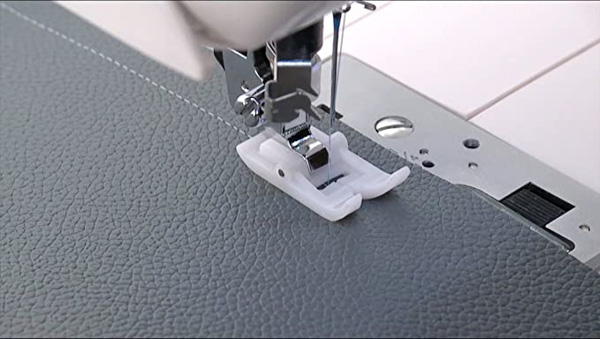
When sewing with vinyl, you will always have to use a nonstick or Teflon foot. These feet have a plastic or treated base so that the material moves smoothly as you sew. If you try to sew with a regular foot, you will find it really sticks to it! Don’t have a non-stick foot yet? Try adding a little bit of matte tape or painter’s tape on the bottom of your foot to prevent the stick!
Vinyl, whether clear or not, adds a LOT of thickness to your projects. Like cork, we recommend it for larger projects or accents on pouches and clutches. We don’t recommend it for strap connectors often because all those layers can be a real challenge to sew through!

Vinyl materials need to be spot-cleaned by hand and allowed to air dry. Vinyl will repel water, so it is great for the bottom of bags, and I ALWAYS use it for the base of the Adventure Time Backpack when I make one!
One downside to sewing with vinyl is that it often doesn’t have a lot of “give,” so when you are sewing curved items, you will have to snip in the seams every ¼” to create that “give” yourself.

Breakdown: Durable, adds structure, intermediate friendly, great for bags, totes or accents on smaller projects, can’t be ironed, must use clips instead of pins
In the next post, we will break down some of the more specialty materials like tweed, linen, wool and leather. For now, you have a great starting point for your next sewing adventure.
Choosing the right material can make or break your project, but it doesn’t have to be overwhelming. With a little trial, error and experimentation, you’ll soon find the materials that work best for your sewing style.
Don’t be afraid to test, mix, and get creative with your handmade bags! Remember: the more bags you make, the more confident you become.
What’s your go-to fabric for bag making? Share it in the comments below, we’d love to hear!
Happy Sewing!

A friend visited Japan and brought me some pieces of lovely thick silk with designs woven in. Could I use these for the outside of a large wallet if I put vinyl along the bottom, where it bends when you open the wallet?
Hi Juli! Thanks for your comment and great question! Are you able to email us a photo of your fabric so we can see what it looks like, before responding properly? Feel free to send it to support @ andriedesigns dot com.